
For Father’s Day my family got me a Nook SimpleTouch with GlowLight, I love it. I love that I can carry around all of Tolkien and Harry Potter in my pocket. I love that I can pick up reading material for my sermon research in seconds. I love that my annotations and highlights are available to me on my other devices should I ever be without my Nook. I love the user interface. I love the eInk display. Actually, that’s not true, I’m absolutely stunned by the eInk display – my brain keeps telling me it’s ink on a page, but I know that it’s not. It’s that good.
Tonight, however, I figured out what I didn’t love about the Nook – the covers.
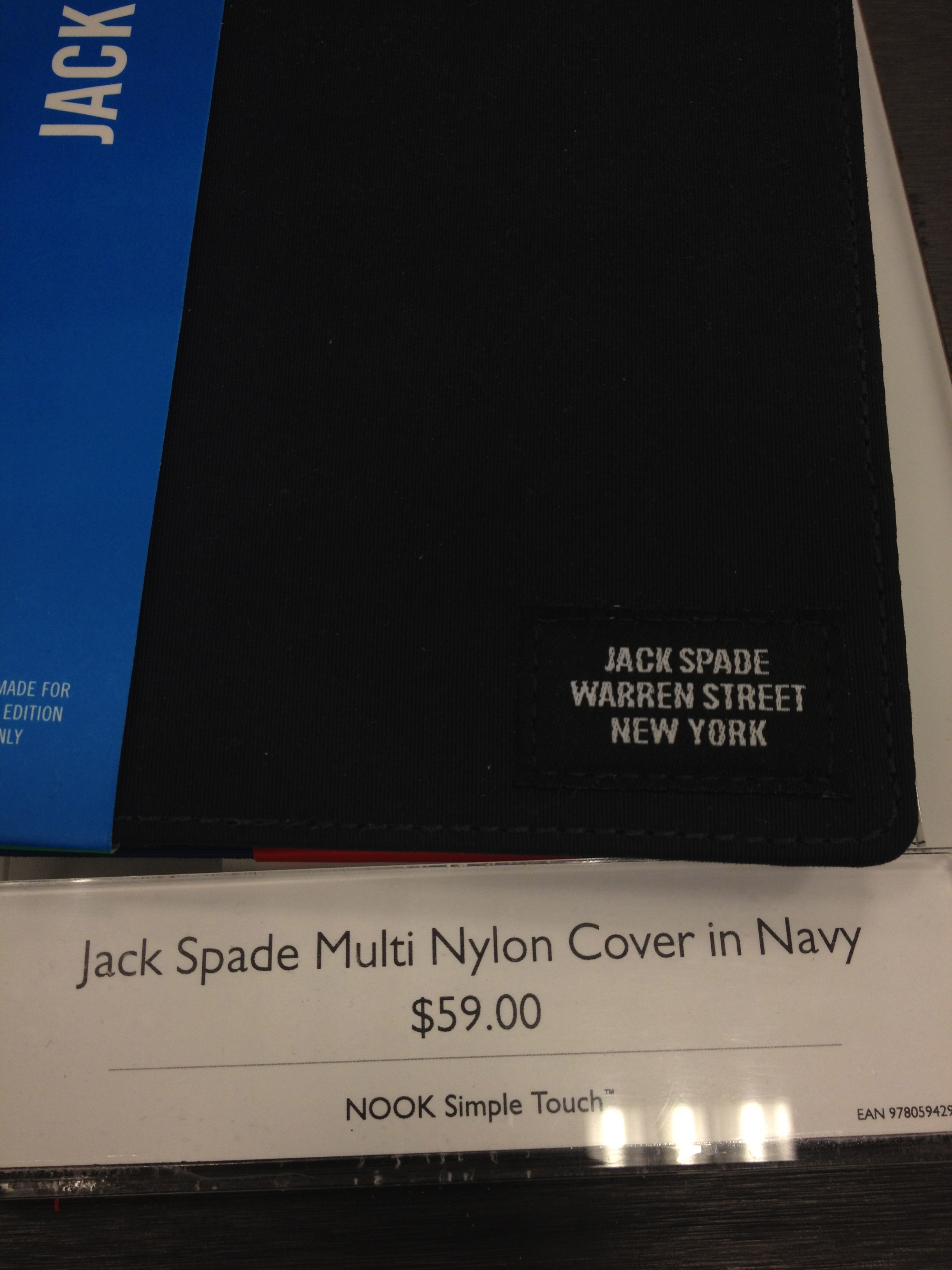
The covers for Barnes & Noble aren’t meant to be utilitarian add-ons to make their device indistinguishable from any other consumer electronic. Instead, they’re meant to be fashion statements, created by fashion designers and set up to make the world know, “Hey, I have a Nook.” They have clasps. They have intricate designs. They have impressed quotations. They come disguised as high-quality hardback books from olden times. They are, from an artistic standpoint, pretty impressive. I also want nothing to do with them.
Why? For two reasons, really.
First, the high-quality design comes at a price. The high-end covers (and, really, the only ones I can see myself carrying) cost $60. That’s $19 cheaper than the low end Kindle. I can’t see myself paying that much to wrap my eReader in a fashion accessory. Even the mid-range covers cost around $30, and the protective sleeve I picked up tonight originally cost $20. If it hadn’t been on sale, I would have walked out of the store tonight without making a purchase.
Second, even a piece of art needs to be functional. This is something Apple understands, and even Microsoft seems to be finally getting with the Surface Tablet (too bad Mr. Ballmer tossed it under the bus to appease his OEMs, but that’s another rant). Consumer electronics are meant to be used – and anything you plan on putting around such a device can’t get in the way with the experience of using it. This is what makes the Apple Smart Cover so cool. it’s slim, rather cute, gets out of the way, and adds functionality to the device. The Nook covers don’t succeed on any of these fronts. The outsides are well-designed and feel like they can put up with some punishment (Barnes & Noble does understand the need for people to feel the cases, the packaging is set up to allow for it). The insides are another story. Most of the cases hold the nook in place with two plastic hooks which stick into the small holes located on the top and bottom edges of the reader. I can’t see these lasting through a drop or two. Also wrapping device in the case changes how it’s used. Suddenly readers have to be aware of what do with the cover while they read, and switching hands suddenly means making sure a loose page doesn’t keep flapping around. In fact, the covers make the device regress – it feels more like reading a book not because of the tactile feel as the pages flip, but because you’re again forced to deal with portions of your reading material for which you currently have no use.
Barnes & Noble wants to show they understand how important design it to their devices. I can appreciate that. The problem is, they haven’t managed to heed Jonathan Ive’s warning that that design is more than just aesthetics.
So, dear Barnes & Noble, I applaud your desire to make the accessories for your excellent devices beautiful, I really do. Even though most of your covers aren’t my style, I appreciate what you’ve managed to create. Still, at the prices you want to charge for these covers, they can’t feel like an inelegantly hacked-in solution. The cover has to be more svelte, and designed to get out of the way when not in use. If you want to charge, for a cover, a price approaching the cost of a rival device – beauty has to be more than skin deep.
Discover more from Painfully Hopeful
Subscribe to get the latest posts sent to your email.
